Xander Jenkins · 29 September 2026
Lodz's vacant industrial plots fuel micro-farming networks that link local food supply chains with school meal programs
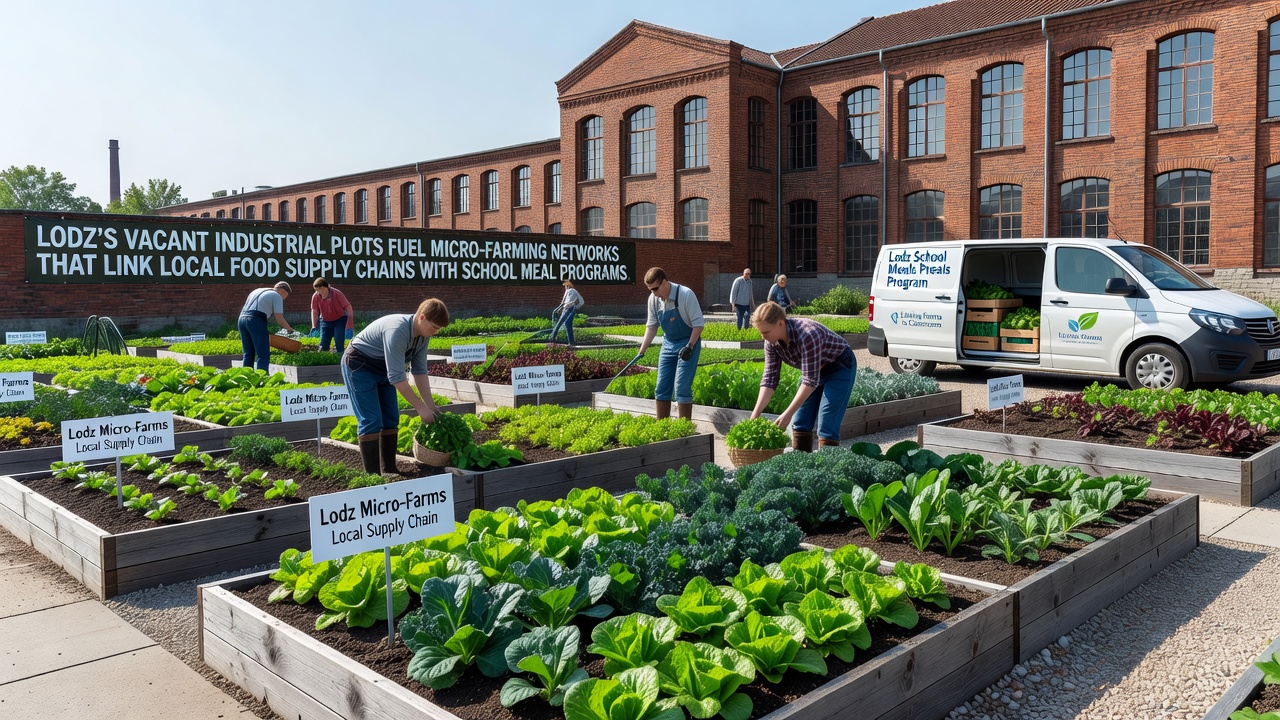
Łódź has long carried the marks of its industrial past, yet observers note that vacant factory sites and unused rail yards now support micro-farming networks that connect local growers directly to regional food distribution and school nutrition programs. Data from municipal land records show that more than 180 hectares of former industrial land have shifted to small-scale cultivation since 2022, with plot sizes averaging under two hectares each. These compact operations rely on soil remediation techniques developed through university partnerships, and they supply fresh produce to food hubs that aggregate output for both commercial buyers and public institutions.
Industrial land conversion and network formation
City planners began mapping underutilized industrial parcels in 2021, and by early 2024 they had identified clusters suitable for intensive vegetable and herb production. Researchers at the University of Łódź documented how raised-bed systems and hydroponic units installed on these sites increased yields per square meter while limiting soil contact with legacy contaminants. Local cooperatives formed around shared irrigation infrastructure and cold-storage facilities, allowing small operators to meet volume requirements that individual plots could not fulfill alone. The resulting networks coordinate planting schedules, harvest timing, and transport logistics so that produce moves from field to packing facility within hours.
Supply chain integration accelerated after the city introduced a digital matching platform that links growers with processors and institutional buyers. Figures released by the Łódź Regional Development Agency indicate that participating farms delivered 1,200 metric tons of vegetables and fruit during the 2025 growing season, a 47 percent increase over the previous year. Distributors route the majority of this volume through regional warehouses that already serve retail outlets, which reduces duplication of transport and maintains cold-chain integrity.
Connection to school meal programs
School nutrition authorities in Łódź and surrounding municipalities began sourcing from these networks in September 2024, and participation expanded steadily through the following academic year. Under the revised procurement framework, caterers receive weekly allocations of leafy greens, root vegetables, and seasonal fruit that meet nutritional standards set by the Polish Ministry of Education. Because the micro-farms operate within a 30-kilometer radius of most schools, delivery distances shortened dramatically, cutting fuel costs and spoilage rates. Kitchen staff report that the consistent freshness allows them to prepare more raw or lightly cooked items, which aligns with updated dietary guidelines that emphasize increased vegetable intake.
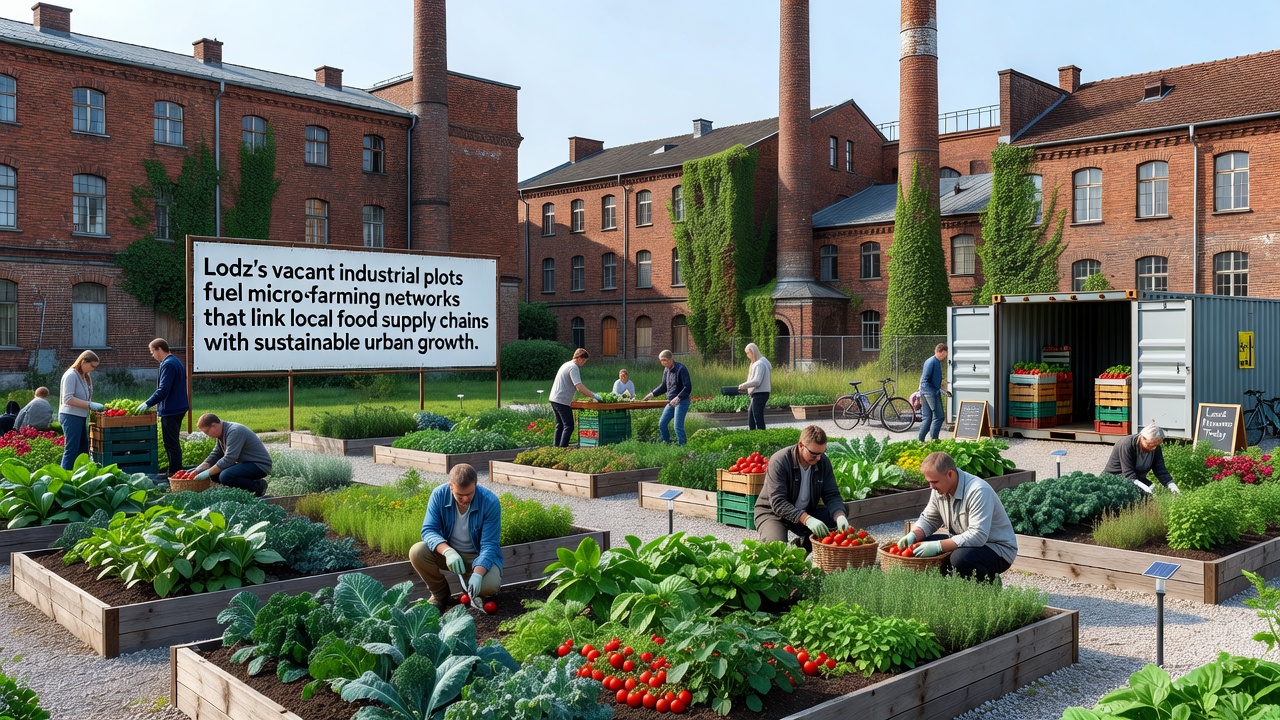
By September 2026 the program is scheduled to include an additional 28 schools across three districts, bringing total enrollment to roughly 19,000 students. Project coordinators have secured multi-year contracts that guarantee minimum purchase volumes, giving growers the stability needed to invest in season-extension infrastructure such as low tunnels and modular greenhouses. Monitoring data collected by the regional health authority show measurable improvements in reported fruit and vegetable consumption among participating students, although longer-term studies remain underway.
Supporting infrastructure and external partnerships
Technical support comes from both domestic research bodies and international organizations focused on urban food systems. One European Commission assessment of short food supply chains highlighted Łódź as an example where former industrial land supports dense production close to demand centers. A separate analysis published by the Food and Agriculture Organization of the United Nations examined similar land-use transitions in mid-sized European cities and noted that coordinated micro-farm networks can stabilize supply for public meal programs while generating local employment. These reports emphasize the importance of soil testing protocols and collective marketing structures that the Łódź initiative adopted early on.
Training programs run by agricultural extension offices teach plot managers about integrated pest management and water-efficient irrigation, skills that prove essential on sites with limited green space. Equipment-sharing arrangements allow multiple farms to access specialized tools without individual capital outlays, and a rotating labor pool helps cover peak harvest periods. Observers note that these practices keep operating costs competitive with larger rural suppliers even though individual plots remain modest in scale.
Conclusion
The transformation of Łódź's vacant industrial plots into micro-farming networks demonstrates how underused urban land can support localized food production that reaches public institutions. Through coordinated logistics, updated procurement rules, and technical assistance, the city has created supply pathways that deliver fresh items to school cafeterias on a regular schedule. Continued expansion planned for 2026 and beyond will test whether these networks can maintain quality and volume while adapting to seasonal and regulatory changes.